Importance of Vendors in Textile Industry 2024
Pakistan’s textile sector is the basis of our economy, bringing together many elements that blend to make an attractive clothing fabric.
The essence of this remarkable plan is the vendors. In this blog, we will evaluate the Importance of vendors in the Textile industry of Pakistan.
|
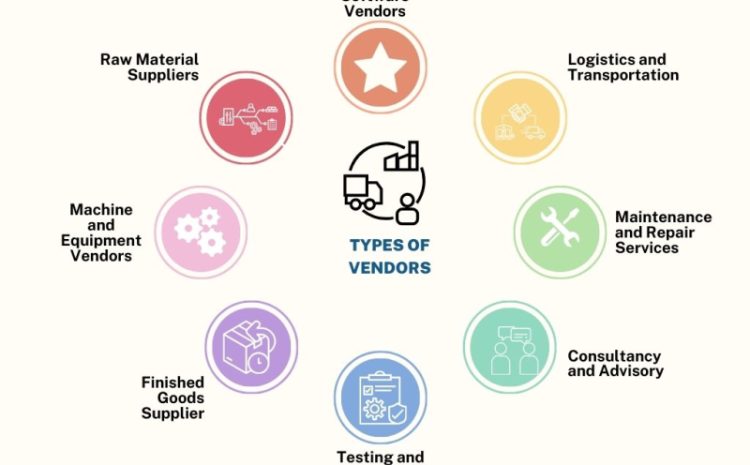
Vendor Type |
Importance in the Textile Industry |
| Raw Material Suppliers | Provide essential materials like cotton and dyes |
| Machine and Equipment Vendors | Ensure access to advanced machinery for efficient production |
| Accessory Providers | Contribute to finishing touches in garment manufacturing |
| Technology and Software Vendors | Facilitate streamlined processes and digital advancements |
| Logistics and Transportation | Ensure timely and safe delivery of materials and products |
| Maintenance and Repair Services | Keep machinery running smoothly, minimizing downtime |
| Consultancy and Advisory | Offer specialized knowledge on market trends and compliance |
| Testing and Quality Assurance | Ensure materials and products meet industry standards |
What is a Vendor?
A vendor is a person or a company that offers goods or services to businesses or consumers. These are important players in several industries like textile industry.
Types of vendors
- Raw Material Vendor: Supplies the raw materials for end products (e.g., cotton for clothing).
- Component Vendor: Supplies key elements involved into the end product (e.g. dyes for textiles).
- Finished Goods Supplier: Provides products that are ready to sell (e.g., woven fabric).
- Service Provider: Provides different services such as transportation, logistic, IT or marketing.
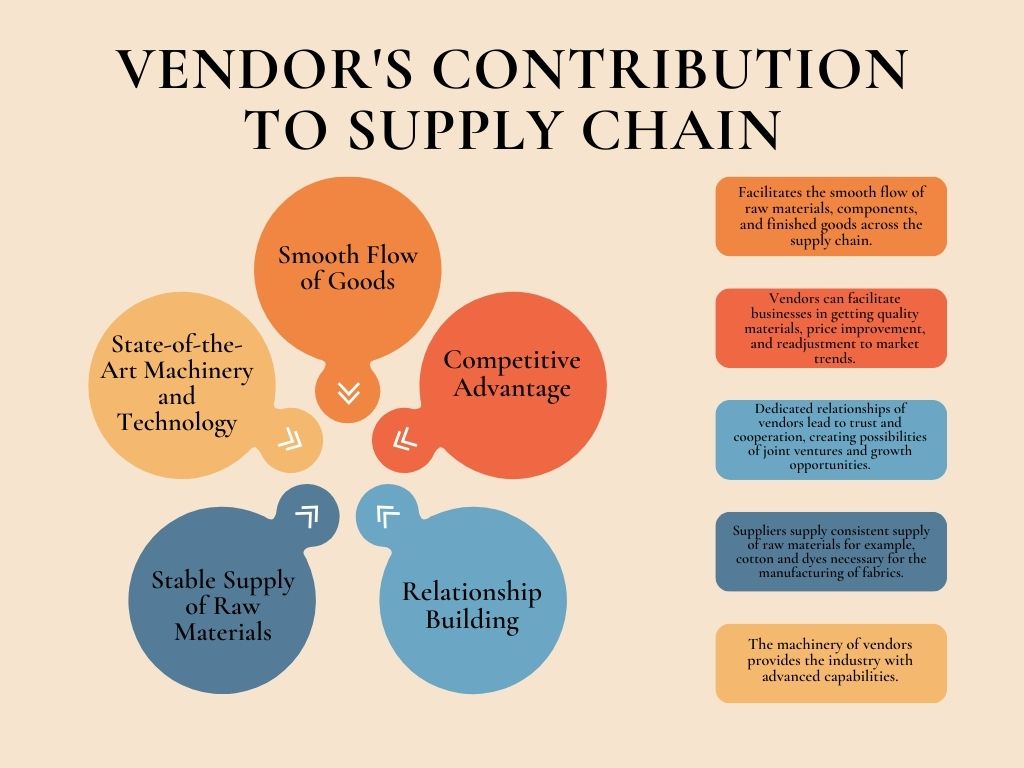
Vendor’s Contribution to Supply Chain
- Smooth Flow of Goods: Facilitates the smooth flow of raw materials, components, and finished goods across the supply chain.
- Competitive Advantage: Vendors can facilitate businesses in getting quality materials, price improvement, and readjustment to market trends.
- Relationship Building: Dedicated relationships of vendors lead to trust and cooperation, creating possibilities of joint ventures and growth opportunities.
- Stable Supply of Raw Materials: Suppliers supply consistent supply of raw materials for example, cotton and dyes necessary for the manufacturing of fabrics. The reliability is the solid rock upon which the whole textile sequence is built.
- State-of-the-Art Machinery and Technology: The machinery of vendors provides the industry with advanced capabilities. Starting from spinning mills to dyeing units, these aids do not only increase the productivity but also quality of final product.
- Facilitating Innovation and Quality Improvements: Suppliers are more than just providers – they are also infusers. Collaborative efforts and feedback circles transform vendors into sources of innovation. They innovate new materials and methods, thus, challenging the limits of what our textile industry can do.
How Apparel Retailers Source Products from Vendors
Two primary methods:
- Wholesale: Retailers buy inventory direct from brands and take ownership.
- Consignment: Brands supply inventory to retailers, who sell it on consignment, and pay for what they sell.
Key factors for choosing vendors
- Quality: The products must meet the standards of the retailer and the customer.
- Price: Competitive pricing guarantees profitability and customer content.
- Reliability: Deadlines and product availability should be strict.
- Minimum order quantities (MOQs): Retailers have to take into consideration their volume of sales and storage space.
- Payment terms: Terms of trade influence the cash flow and the overall profitability.
- Vendor performance management: Frequent evaluation of vendor performance helps in maintaining quality, effectiveness, and good relations.
- Technology’s role: Software tools enable communication flow, order tracking, and vendor management.
- Ethical sourcing: Most retailers give attention to ethical sourcing practices aimed at guaranteeing that the production process is responsible and labor conditions are fair.
Shifting Dynamics in Buyer-Vendor Relationships
- From Dictatorship to Partnership:The way things used to be, where buyers always told vendors what to do, is now turning into a teamwork approach.
- Drivers of Change: More competition and customers being in charge are making both vendors and buyers realize they need each other to do well.
- Benefits of Collaboration:Having friendly communication between them means getting the right quality, good prices, and things delivered on time. It’s like sharing secrets and helping each other out.
- Transparency and Trust:Both parties are increasingly open to sharing information to overcome competitive challenges.
- Mutual Dependence:The vendors know they really need buyers for sustained growth, so they want to be great friends.
The Importance of Vendors Management in the Clothing Industry
Why exactly are these “hidden hands” so important? Let’s break it down:
- Vendors play a crucial role: They serve as go-between of manufacturers and retailers to speed communication and delivery of products.
- Information exchange: Vendors collect customer feedback from retailers and communicate it back to manufacturers, who use it to enhance the products and satisfy varied customer tastes.
- Market trend analysis: Vendors keep an eye on what garments sell well and communicate this information to the manufacturers, who then can adjust production and make money.
- Streamlined operations: An effective vendor management system guarantees timely deliveries, quality control, and cost efficiency along the clothing production line.
- Business expansion: Vigorous vendor relationships create trust and partnership which could lead to possible joint venture and growth opportunitie
- Keeping costs in check: Suppliers make certain mills and factories are charged competitive prices for the raw materials and transportation. This helps in keeping ready made garments cheap for all.
- Making clothes that shine: It is as the best ingredients produce good meal, good suppliers offer the best materials and latest technology. This means clothes that are not only pretty but also of good quality.
- Reaching the world: They assist factories in exporting garments that generate crucial foreign income that makes the economy stronger and provides employment for many Pakistanis.
Changing Dynamics in Buyer-Vendor Relationships
The power dynamic is shifting from dictatorship to partnership:
- Drivers of Change: More competition and consumer pressure.
- Benefits of Collaboration: Stronger relationships provide the required quality, cost, and speed.
- Transparency and Trust: Sharing of knowledge to fight challenges.
- Mutual Dependence: Vendors rely on buyers for sustained growth.
Why Is Vendor Management Important?
Vendors act as intermediaries, facilitating information flow and product delivery. They contribute to:
- Information Exchange: Customer feedback collection and product improvement.
- Market Trend Analysis: Identify best-selling items and notify the manufacturers.
- Streamlined Operations: Timely deliveries, quality control, and cost effectiveness.
- Business Expansion: Close relationships result in possible partnerships and development.
Future Trends in Vendor Collaboration
Going forward, technology will become one of the essential aspects of vendor partnerships. The industry is advancing from sustainable practices and ethical sourcing.
By adopting these trends, vendors and textile companies can achieve a win-win situation where all can benefit from both the environment and the economy.
Importance of Local vs.International Vendors
Choosing between local and international suppliers is a critical choice. Local vendors strengthen the national economy and minimize logistics issues, while external vendors offer a world view and give access to varied resources. A thriving textile industry should have a balance.
Factors Affecting Partnership with Vendors
- Market Fluctuations: The roller coaster of market trends may affect the prices of the raw materials and create problems for the suppliers. Everyone in the textile chain is affected by this, which makes adaptability an attribute of successful vendor partnerships.
- Technological Advancements: It is a world where technology changes at a fast rate and thus vendors have to keep on updating their equipment. It is a financial challenge but at the same time an opportunity for development and modernization.
Strategies for Overcoming Challenges
Vendor partnerships success is based on communication and creativity. Collaboration of textile enterprises and sellers is necessary to overcome problems, promoting robustness and stability.
FAQs
Why are vendors important?
Vendors are important because they are the backbone of sourcing products and services.
What is a cloth vendor?
A clothing vendor provides clothing items to retailers or to consumers directly.
Why is fabric sourcing important?
Fabric sourcing is important as it directly influences the quality, durability, and overall appeal of the end product.
What is the importance of clothing industry?
Clothing making is super important in Pakistan because it helps the country make money, gives people jobs, and lets the world see the cool fabrics and styles from Pakistan.
Wrapping Up
Vendors are the hidden threads that interlace the fabric of Pakistan’s textile industry. But let’s not forget about their value. Nurturing strong vendor relationships will help our textile businesses to survive but also to thrive in the dynamic global market.
What is your opinion about vendors in the textile industry of Pakistan? Have you ever felt the impact of vendor collaborations directly? Write your thoughts and stories in the section below.